Medical-Grade Isolate Protein: A Safe Choice For Sensitive Gut
- 07 Oct 2026
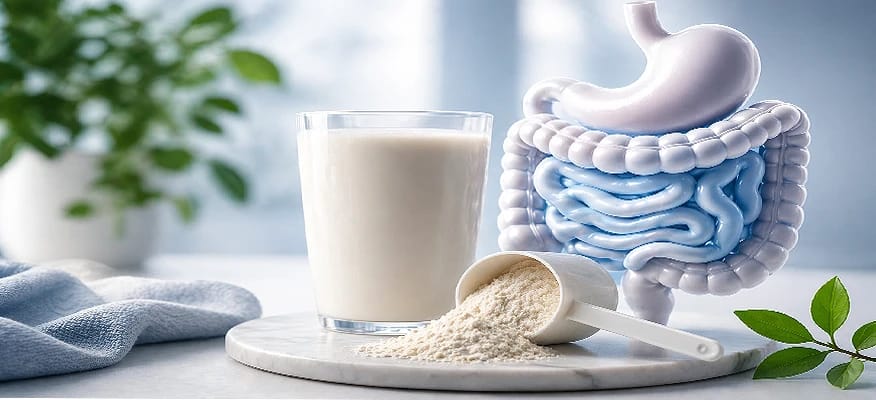
Key highlights or summary
- Choosing the right protein matters, especially if you have a sensitive stomach.
- High-quality, medical-grade protein may help reduce bloating and discomfort.
- Whey protein isolate is pure, high in protein, and low in fat and carbs.
- It provides essential amino acids your body needs for strength and repair.
- It helps maintain muscle, especially in older adults, along with faster recovery after exercise.
Have you ever finished a protein shake only to feel uncomfortably full, bloated, or unsettled soon after? For many people, especially those with sensitive digestion, this is a common and frustrating experience.
Protein is essential for muscle maintenance, tissue repair, and overall recovery. But not all proteins are equally easy for the body to process. In fact, certain forms of protein particularly those containing lactose or complex protein fractions can be difficult to digest, leading to symptoms such as bloating, gas, or discomfort.
This is often described as “protein intolerance,” where the body struggles to properly break down and absorb certain protein sources. According to the National Institutes of Health, digestive discomfort related to protein intake is frequently linked to lactose intolerance or reduced digestive capacity, both of which can affect how well nutrients are absorbed.
What matters, then, is not just how much protein you consume, but how well your body can use it. This is where medical-grade whey protein isolate stands apart. Highly purified and virtually lactose-free, it is designed to be rapidly absorbed and easier on the digestive system making it a suitable option for individuals with sensitive guts, older adults, or those recovering from illness.
Clinical research, including studies published in Medicine & Science in Sports & Exercise, has shown that whey protein supports muscle protein synthesis and recovery, while its isolate form offers improved digestibility due to its refined composition.
In this article, we explore why medical-grade whey protein isolate is often considered a safer, more effective choice for sensitive digestion and how selecting the right form of protein can support better recovery, comfort, and long-term health.
What is medical grade HIGH QUALITY protein?
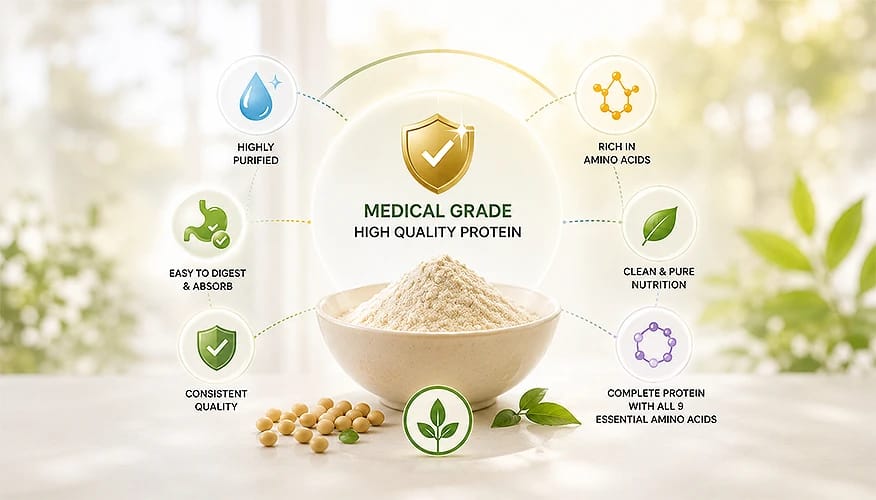
The term “medical grade high quality” protein is often used to describe the type of protein that meets higher standards of purity, safety, and quality. These proteins have following qualities:
- Highly purified – with minimal fat, lactose-free protein, and unwanted additives
- Easy to digest and absorb – especially important for fragile or recovering individuals
- Consistent in quality – so each serving delivers a reliable amount of protein
- Rich in amino acids – the building block of proteins
Unlike regular protein powders that may contain fillers, excess sugars, or artificial ingredients, medical-grade protein focuses on clean nutrition.
Another important aspect of High-quality proteins as dietary supplements is their ability to provide all the 9 essential amino acids which are not produced in the human body. These essential amino acids are critical for growth, maintenance, and overall health of the body.
Understanding protein quality: What is biological value?
How effective a high-quality protein for patients is used by our body depends on its biological value.
Biological value is a way to measure how efficiently your body uses the protein you eat. The higher the biological value, the better the protein provides essential amino acids required for repair, recovery, and overall physiological functions.
For a sensitive gut, a high biological value protein helps to easily use up the protein from the gut with minimal digestive burden and improved absorption. One such type of protein is whey protein with a high biological value, indicating its good digestibility and efficient utilization by our body.
Whey protein: Types, benefits, and differences
Whey protein comes from milk. In cow’s milk, about 20% of the protein is whey, while the remaining 80% is casein.
There are different types of whey protein available, including whey protein concentrate (WPC), whey protein isolate (WPI), and whey protein hydrolysate (WPH), each varying in purity, absorption rate, and processing methods.
What makes whey protein so effective—especially for muscle growth—is its nutritional composition. Here’s a quick look at the difference between different whey:
| Component | Whey Powder | Whey Concentrate | Whey Isolate |
|---|---|---|---|
| Protein (%) | 11 – 14.5% | 25 – 89% | 90% or higher |
| Lactose (%) | 63 – 75% | 10 – 55% | ~0.5% (Very Low) |
| Fat (%) | 1 – 1.5% | 2 – 10% | ~0.5% (Very Low) |
Isolate vs Whey: Why whey protein isolate stands out
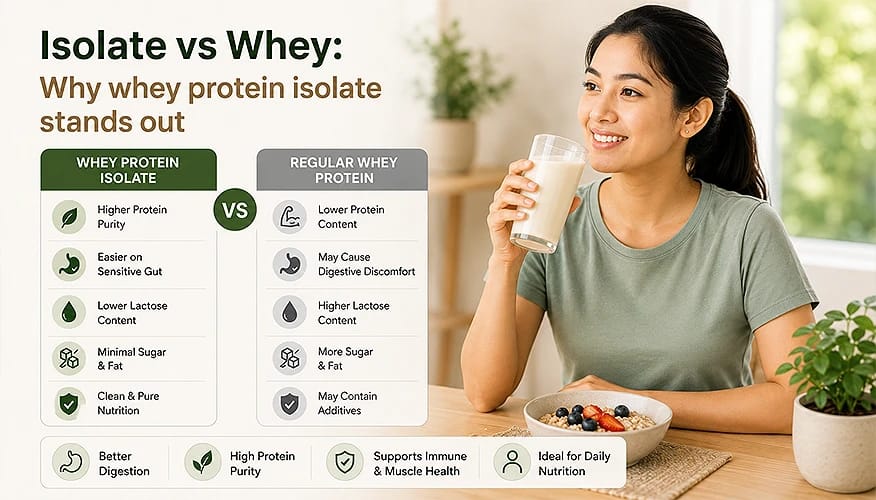
Now that we know what whey is and the different types available, let’s understand what isolate protein is, what isolate protein benefits are — and how it may support your gut health.
- Whey Protein Isolate is one of the purest and cleanest sources of protein dietary supplements.
- It is fast digesting protein containing 90% or more protein, making it ideal for anyone who wants high-quality nutrition without extra fat or carbs.
- During processing, most of the lactose and fat are removed, so it’s a great option even for people who are lactose-intolerant considering it a lactose-free protein.
- When we compare Isolate vs Whey, isolates deliver more protein in fewer calories, making them perfect for muscle support, weight control, and recovery after illness or exercise. Along with this, it also has a high biological value, making it more efficient for your body to use it for muscle repair and growth.
Why choose whey isolate for a sensitive gut?
When compared with other sources of whey protein, whey isolate is more than just a protein source.
- It is a fast-digesting protein providing amino acids that help build and repair muscles.
- It contains bioactive peptides, which are small protein fragments that support other important body functions. These peptides help improve muscle health and support the gut microbiome, especially in older adults.
- Whey isolate may help reduce harmful gut bacteria such as Proteobacteria, which are often linked to gut diseases and microbiome imbalance (also called dysbiosis).
- At the same time, it supports the growth of beneficial gut bacteria. These good bacteria play an important role in maintaining healthy metabolism.
- Whey isolate may also help the gut break down dietary fiber more effectively. It can support anti-inflammatory processes in people who have gut imbalances.
- Research also suggests that whey isolate may increase certain gut bacteria that help strengthen the gut barrier. A stronger gut barrier supports both gut health and muscle metabolism, especially during aging.
- Some studies also report improvements in bowel habits. This includes better bowel frequency, reduced urgency, and improvements in constipation symptoms.
Overall, these changes suggest that whey protein isolate as a dietary supplement may help guide the gut microbiome toward a healthier balance that supports muscle maintenance and digestive health.
IMMUPLEX: A measured dose of high-quality protein
IMMUPLEX is a smart way to get the protein your body needs—along with extra immune support. It contains whey protein isolate, one of the purest forms of protein for patients, which is easy to digest and helps keep your muscles strong. This is especially important for people who are recovering from illness, surgery, or those managing conditions like diabetes.
But IMMUPLEX doesn’t stop at protein. It also provides essential minerals like zinc and selenium, which help your immune system stay active and healthy.
Each scoop of IMMUPLEX gives you 9 grams of high-quality protein without unnecessary calories or sugar. It’s low in lactose, so it’s gentle on the stomach. You can mix it in water or your favorite drink. It comes in Banana-Vanilla or Neutral flavors for easy use.
Conclusion
Getting enough high-quality protein for patients is key to maintaining muscle strength, energy levels, and overall health. Whey is one of the most efficient protein sources of dietary supplements because it provides essential amino acids that the body needs for repair, recovery, and daily function.
However, when we compare Isolate vs Whey, Whey protein isolate offers additional advantages for people with sensitive digestion. With very low lactose (lactose-free protein) and fat, it delivers concentrated protein in a form that is easier to digest and absorb. This easily digestible protein with minimal lactose content makes it a suitable option for individuals who need high protein support without putting extra strain on the gut.
For ageing adults and those with digestive concerns, medical-grade whey protein isolate can be a smart nutritional choice. By supporting muscle maintenance while being gentle on digestion and helping maintain bowel regularity, it provides practical, long-term nutritional support for overall wellness.
Rate our article
We'd love to know!
- 0
- 0
- 0
- 0
Related articles
See AllFrequently asked questions
Most adults need 0.8–1.2 g of protein per kg of body weight, depending on activity levels and health goals. Whey protein isolate helps meet daily needs but should be used alongside a balanced diet, not as the only protein source.
Whey protein isolate is less likely to cause bloating because it contains minimal lactose and fat. This makes it easier to digest than regular whey protein, especially for individuals with lactose intolerance or sensitive digestion.
No, whey protein isolate cannot replace meals. It provides high-quality protein but lacks essential nutrients like fiber, healthy fats, and vitamins. It should be used as a supplement alongside a balanced diet.
Whey protein isolate is more refined, with higher protein content and very low lactose. This makes it easier to digest and better suited for people with sensitive digestion compared to whey protein concentrate.
Symptoms like bloating, gas, or diarrhea after consuming protein may indicate poor tolerance. This is often due to lactose or additives. Switching to whey protein isolate can help improve digestion and reduce discomfort.
How was the experience with article?
We'd love to know!