How Protein Helps Control Blood Sugar In People With Diabetes
- 07 Oct 2026

Key highlights or summary
- Eating protein along with sugar can help your body release insulin and lower blood sugar
- Taking just about 15 grams of whey protein before meals can lower the post-meal blood sugar by nearly 13%
- The most effective protein for reducing blood sugar levels after meals was whey, followed by tuna, turkey, and egg whites.
- For protein, the worldwide Recommended Dietary Allowance (RDA) is said to be 0.8 g per kilogram of body weight.
- For people living with diabetes, eating a more-protein, fewer-carbohydrate diet improves blood sugar levels throughout 24 hours.
Living with pre-diabetes or diabetes means constantly thinking about what you eat and how it impacts your blood sugar. It can feel like a tricky balancing act, right? We often hear about carbs and fats, but what about protein?
Could this everyday nutrient be your friend in managing your blood sugar levels? We're going into great detail in this blog about how protein is essential for diabetics' blood sugar regulation.
You'll learn how adding extra protein to your meals can help you feel filled for longer periods of time, prevent sugar spikes, and improve your general health.
What is protein and its function in the body?
Think of proteins as the body's essential building blocks. Just like bricks build a house, tiny pieces called 'amino acids' join together to create these bigger protein molecules.
- Protein function: Your body uses these proteins for almost everything – from helping your muscles grow and stay strong, to keeping your organs working properly, and even controlling how your body functions. They're like the busy workers inside you!
- Proteins are packed with the essential building blocks your body uses to grow and repair itself.
- Proteins come in all shapes and sizes. Some proteins are like speedy helpers called enzymes. They help your body quickly digest food. Other proteins work as messengers called hormones.
- Hormones are signals that tell your body what to do, like telling your body to grow, or even managing how you use energy. A great example of a protein messenger is insulin. It is a protein hormone that plays a key role in making sure your blood sugar stays at a healthy level.
How protein affects the blood sugar levels?
Our bodies have a clever way of handling blood sugar, thanks to an organ called the pancreas. It's a small factory that makes two important 'messengers' for blood sugar: insulin and glucagon.
When you eat protein, it can gently encourage your pancreas to release both insulin and glucagon.
- Insulin's job: It helps your body's cells, especially your muscles, take in sugar (glucose) from your blood. This helps lower your blood sugar levels.
- Glucagon's job: Glucagon helps keep your blood sugar from falling too low while your body processes protein
So, when protein is eaten along with food that has sugar, it can help your body release insulin, which then helps to reduce those sudden rises in blood sugar levels.
While this effect might be small in very healthy young people, for someone managing diabetes, every little bit of help counts!
Whey protein and blood sugar control
When cheese or curd is made, a liquid called whey is left over. It's a good protein that offers numerous health benefits.
Did you know that proteins found in milk, like whey and casein, can be natural helpers for your blood sugar? Research suggests that for people who are overweight, have pre-diabetes, or Type 2 diabetes, these proteins can gently encourage their body to make insulin.
Studies have shown that whey protein can make those blood sugar jumps after you eat much smaller. This is why it's considered a valuable part of a healthy diet to keep your blood sugar levels steady.
Studies show that taking just a small amount of whey protein (about 15 grams) right before your main meals can release more insulin, lowering your blood sugar after the meal by about 13%. Plus, it helps you feel fuller for longer, which is good for managing your appetite.
Out of proteins like whey, tuna, turkey, and egg whites, whey protein showed the best results for lowering blood sugar after meals. It kept blood sugar significantly lower than turkey or eggs.
Best protein sources for people with diabetes
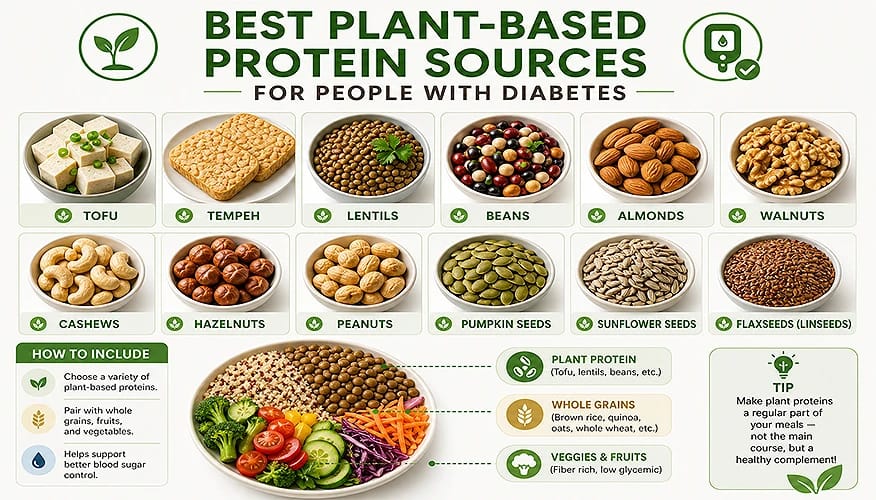
Studies on people with diabetes suggest that if you replace some of the animal protein in your diet with plant-based proteins, it may lead to some improvements in your blood sugar control.
- Tofu, tempeh, lentils, and beans are excellent plant protein sources.
- Almonds, cashews, hazelnuts, macadamias, peanuts, walnuts, sunflower, pumpkin, or linseed are a few other plant-based protein sources that should be promoted.
- Excellent sources of lean animal protein include skinless chicken, lower-fat cuts of beef or pig, seafood, or eggs, as well as lower-fat dairy products (e.g., cheese and skim or low-fat milk and dairy).
- For most meals, protein sources should be a complement to whole grains, fruits, and vegetables rather than the main course.
How much protein do you need per day?
For protein, the worldwide Recommended Dietary Allowance (RDA) is said to be 0.8 g per kilogram of body weight, no matter what years of age. Individual protein needs vary and are influenced by many variables, including age, health, and degree of physical activity.
Health benefits of protein for people with diabetes
To support both weight loss and improved blood sugar management, make protein a priority.
Studies indicate that a daily protein intake exceeding 1 gram per kilogram of body weight can significantly help you retain nearly 1 kilogram of valuable muscle mass while you're losing weight, a key advantage over lower protein consumption.
For people living with diabetes, studies have shown that eating a diet with more protein and fewer carbohydrates (while keeping your weight steady) can bring good results. It’s shown to improve:
- Your fasting blood sugar
- Your blood sugar levels throughout 24 hours
More protein intake stabilizes blood glucose levels, prevents and controls diabetes, and reduces the chances of death.
Tips for including more protein in a diabetes-friendly diet
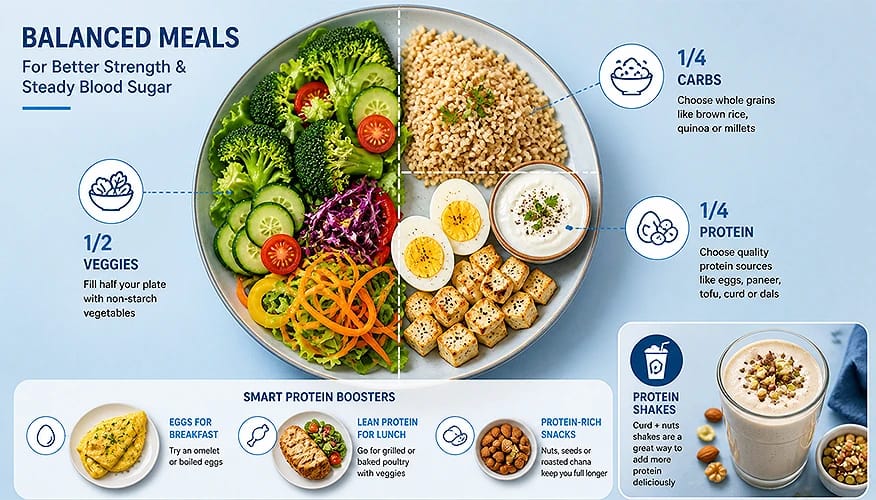
For people with diabetes, it is recommended that a quarter of their food dish should consist of protein.
- One-half of your dish may consist of non-starch vegetables like broccoli and salads.
- Carbohydrates may fill one-quarter of the dish.
- You may use eggs for breakfast, like in an omelet, baked or grilled poultry for lunch, and team this up with protein-rich snacks like nuts.
- Best protein shakes for diabetics may include those made using curd and nuts and can add more protein to your diabetes-friendly diet.
Conclusion
In diabetes, blood sugar control is critical. Protein helps to control blood sugar by promoting insulin production, which absorbs sugar from the blood. Whey protein promotes insulin activity in overweight, pre-diabetic, and diabetic people.
Plant proteins may control blood sugar better than animal proteins in diabetic people and include lentils, beans, and nuts. For people with diabetes, eating a diet with more protein and fewer carbohydrates improves their blood sugar throughout the day.
Rate our article
We'd love to know!
- 0
- 0
- 0
- 0
Related articles
See AllFrequently asked questions
Protein stimulates a gradual release of insulin from the pancreas, which helps lower blood sugar levels in a controlled way. Unlike refined carbohydrates, it doesn’t cause sharp spikes, making it useful for more stable glucose management.
Plant-based proteins such as lentils, beans, and soy are particularly effective because they come with fiber, which slows glucose absorption. Whey protein has also been shown to improve post-meal blood sugar response when included appropriately.
Including protein in meals slows gastric emptying and reduces the rate at which carbohydrates are absorbed. This helps prevent sudden spikes in blood sugar after eating and supports more sustained energy levels.
A combination works best. Plant-based proteins like legumes, tofu, and nuts offer fiber and heart-health benefits, while high-quality proteins like whey can support post-meal glucose control when used in moderation.
An intake of around 1–1.2 g per kg of body weight per day is generally beneficial. This helps maintain muscle mass, supports metabolism, and can improve overall blood sugar regulation when part of a balanced diet.
Balanced meals that include protein, fiber-rich carbohydrates, and healthy fats are key. This combination slows digestion, reduces glucose spikes, and helps maintain steady blood sugar levels throughout the day.
Protein gently stimulates insulin release without causing rapid spikes in blood sugar. This makes it a useful nutrient for supporting stable glucose control over time.
Yes. Protein supports the release of both insulin and glucagon. While insulin lowers blood sugar, glucagon helps prevent it from dropping too low, creating a more balanced response.
Yes. When needed, the body can convert amino acids from protein into glucose through a process called gluconeogenesis, helping maintain blood sugar levels during fasting or low carbohydrate intake.
Insulin is the primary hormone responsible for lowering blood sugar by enabling cells to absorb glucose from the bloodstream.
How was the experience with article?
We'd love to know!