How To Build A Low-Sugar, High-Protein Diet For Diabetes
- 07 Oct 2026

Key highlights or summary
- Choose veggies, whole grains, lean protein, and low-fat dairy; limit sugar and refined carbs.
- Include protein daily to support muscles and steady blood sugar.
- Whey protein helps control blood sugar after meals and may reduce appetite.
- Low-sugar, high-protein meals help lower blood sugar and manage weight.
- Plan low-carb, high-protein meals with meats, fish, eggs, beans, tofu, and nuts.
- Meal prep, grocery lists, label reading, and portion control keep you on track
About 537 million adults worldwide were living with diabetes in 2021, and this number is expected to rise to 643 million by 2030.
One major reason for this rapid increase is today’s lifestyle—less physical activity and eating habits that include high amounts of saturated fats, salt, and refined sugar.
The good news is that the right nutrition can make a big difference. There isn’t one perfect diet for everyone with diabetes. But studies show that higher-protein diets can keep you full for longer and make healthy eating easier to follow—making them a smart option for people with type 2 diabetes.
In this blog, we’ll discuss diabetes-friendly foods, the best protein sources, and how a high-protein diet can help in type 2 diabetes.
Understanding blood sugar and glucose levels
Blood sugar (also called glucose) is the main type of sugar in your blood and your body’s key source of energy. Blood sugar comes from the food you eat, which your body breaks down into glucose and releases into the blood. This rise in blood sugar tells your pancreas to make insulin, a hormone that helps move glucose into your cells for energy.
If you have diabetes, keeping your blood sugar within a healthy range is very important. Common targets are:
- Before meals: 80–130 mg/dL
- Two hours after meals: Less than 180 mg/dL
Your personal target may be different based on your age, health conditions, or your doctor’s advice.
Diabetic diet food list: What to eat and what to avoid
Eating well with diabetes doesn’t mean giving up tasty foods—it means choosing smarter.
- Fill your plate with colorful fruits and veggies, whole grains like brown rice or oats, lean proteins such as chicken, fish, beans, or tofu, and low-fat dairy like yogurt or milk. These foods help keep your energy steady and your blood sugar in balance.
- Try to limit sweets, sugary drinks, white bread, white rice, fried foods, salty snacks, and alcohol. You don’t have to avoid them forever—just enjoy smaller portions less often.
Best protein sources for diabetics
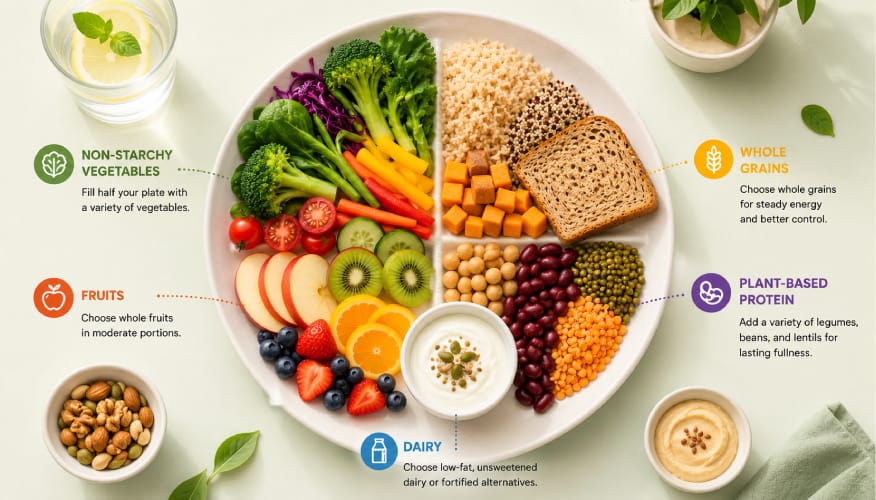
Protein is an important part of a healthy diabetes diet—Not all proteins are the same, so choosing wisely matters.
- Plant-based proteins like beans, lentils, peas, soy products, nuts, hummus, and tofu provide protein plus fiber and healthy fats.
- Fish and seafood, especially salmon, tuna, and sardines, are rich in heart-healthy omega-3s—try to eat them twice a week.
- Skinless poultry, eggs, and low-fat cheese are good lean options.
- Game meats and lean cuts of beef, pork, or lamb can be enjoyed occasionally.
- Limit red and processed meats (like bacon, ham, hot dogs) as they are higher in fat and sodium.
What Is the best protein for diabetics?
Whey protein is a highly recommended option for people with diabetes. It’s a protein made during cheese production that is quickly absorbed by the body.
Whey can help slow down how fast food leaves the stomach, stimulate insulin and gut hormones, and reduce blood sugar spikes after meals—especially if taken a few minutes before eating. It may also help control appetite and reduce overall food intake.
Compared to other proteins like casein, whey is considered “fast” because it digests quickly and contains more branched-chain amino acids, which are beneficial for muscles and overall health. This makes whey a practical choice for a dietary supplement in diabetes management.
How a low-sugar, high-protein diet helps lower blood sugar
Eating more protein can help you feel full for longer by boosting “fullness” hormones and lowering “hunger” hormones. For people with type 2 diabetes, a high-protein diet may also help manage blood sugar levels.
Proteins contain special nutrients called branched-chain amino acids (BCAAs), especially leucine, which play a key role in improving how the body uses insulin and controls blood sugar. Research shows that higher-protein diets may lower the risk of developing type 2 diabetes and support better glucose control.
A high-protein diet can help people with type 2 diabetes by reducing blood sugar after meals and supporting better overall glucose control.
- Using fasting blood sugar as a starting point, a high-protein diet lowered daily blood sugar levels by about 40%.
- After 5 weeks, average long-term blood sugar (HbA1c) dropped 0.8% on the high-protein diet, compared to 0.3% on a regular diet—a significant improvement.
Low-carb, high-protein foods for diabetics
Healthy low-carb foods for diabetes
0 g carbs
- Protein: Chicken, turkey, beef, pork, salmon, egg
- Dairy: Butter, ghee
- Liquids: Water, coffee, olive oil, vinegar
1–2 g carbs
- Protein: Ham
- Dairy: Cheese, cream cheese
- Veggies: Lettuce, spinach, olives, mushrooms, avocado
3–4 g carbs
- Protein: Almonds, hummus
- Veggies: Cabbage, asparagus, cauliflower, broccoli, tomato, cucumber, zucchini, eggplant
5–10 g carbs
- Protein: Salami
- Veggies: Peppers, kale, onions, Brussels sprouts, squash, carrot
Healthy protein picks
- Plant proteins: legumes, lentils, tofu, tempeh, nuts, seeds, nut butters (watch for added salt/sugar).
- Meat alternatives: can be used but check labels for sodium and fat.
- Lean animal proteins: skinless poultry, lean beef/pork, fish, eggs, and low-fat dairy.
- Pair protein with veggies, fruits, and whole grains—don’t let protein be the whole plate.
Building a low-carb, high-protein diet plan
Begin small. Try changing just one meal a day—like breakfast, lunch, or dinner—to a low-carb option. Stick with it for 1–2 weeks. Once you feel good with that change, move on to another meal.
Tips to keep it simple:
- Add more protein, non-starchy veggies, and healthy fats (avocado, olive oil, nuts, seeds).
- Cut back on starches and sugars.
- Swap sugary drinks (soda, juice) for water or tea.
- Use sugar-free creamer instead of flavored coffee creamers.
- Snack smart:Choose fruits and non-starchy veggies (like cucumbers, peppers, celery).
Add a little protein or healthy fat (nuts, cheese, yogurt) for balance

Tips for success: Grocery shopping and meal prep
Managing diabetes starts with planning your meals and shopping wisely.
- Make a weekly menu with breakfast, lunch, dinner, and snacks, using sale items and what’s already in your pantry.
- Prep once, eat twice—repeat meals or swap fruits, veggies, or spices for variety.
- Shop with a list and stick to it, focusing on fresh produce, lean proteins, whole grains, and low-fat dairy.
- Read labels to choose foods high in protein and fiber, and low in added sugars and sodium.
Use the plate method: Half your plate non-starchy veggies, one-quarter protein, one-quarter carbs. Watch portion sizes, measure snacks, and enjoy smaller servings. Planning ahead saves time, reduces stress, and helps keep blood sugar steady.
Conclusion
For people with diabetes, following a low-sugar, low-carb, high-protein diet is a powerful way to manage blood sugar, improve energy, and support overall health. Choosing foods like lean meats, poultry, fish, beans, lentils, tofu, and low-fat dairy keeps meals filling without sharp glucose spikes.
Whey protein is especially valuable—it’s easy to digest, helps preserve muscle, and promotes better blood sugar control when included in daily nutrition. Pair these healthy choices with regular physical activity, portion awareness, and guidance from your healthcare team to build lasting habits.
Remember, progress comes from consistency—each balanced meal and mindful choice brings you closer to steady control and confident living with diabetes.
Rate our article
We'd love to know!
- 0
- 0
- 0
- 0
Related articles
See AllFrequently asked questions
Choose lean meats, fish, eggs, beans, tofu, and nuts while limiting sweets, sugary drinks, and highly processed snacks.
A high-protein diabetic meal plan focuses on lean proteins, controlled carbohydrates, fiber-rich foods, and lower sugar intake to help support steady blood sugar and energy levels.
Eggs, fish, chicken, tofu, nuts, cheese, and leafy vegetables are naturally low in sugar and contain no added sugars.
Protein-rich foods such as eggs, fish, chicken, tofu, cheese, and nuts have minimal impact on blood sugar when eaten in balanced portions.
Whey protein, fish, poultry, beans, tofu, lentils, and nuts are excellent protein choices for people with diabetes.
Regular physical activity, weight management, balanced low-refined-carb meals, good sleep, and adequate protein intake can help improve insulin sensitivity over time.
Beans, lentils, peas, edamame, and soy-based foods are among the best plant-based protein sources and also provide fiber.
Spread protein across meals and snacks — for example, eggs at breakfast, chicken or fish at lunch, beans or tofu at dinner, and nuts or yogurt between meals.
Grilled chicken or fish paired with beans, lentils, tofu, and plenty of non-starchy vegetables makes a balanced, blood sugar–friendly lunch.
Brown rice, wild rice, red rice, and basmati rice are generally better choices than refined white rice because they have more fiber and a slower impact on blood sugar.
How was the experience with article?
We'd love to know!