Is Your ‘Diabetic’ Food Actually Low GI? The Truth About Maltodextrin
- 07 Oct 2026
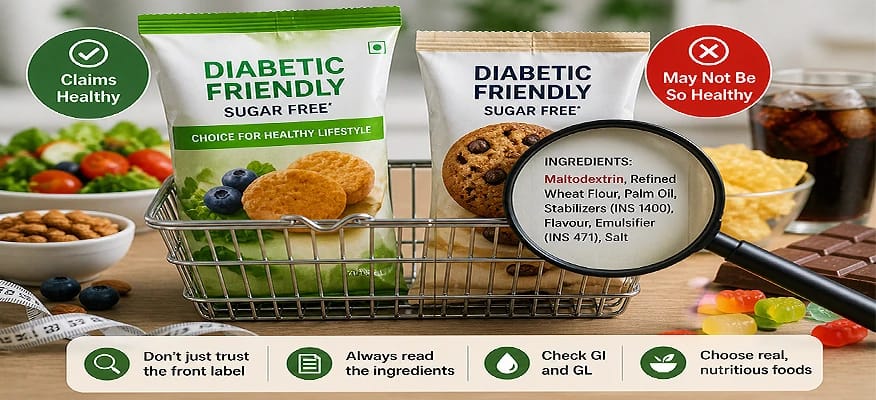
Key highlights or summary
- The Glycemic Index (GI) helps you understand how quickly foods raise blood sugar.
- Low GI foods are important for better glycemic control in diabetes and prediabetes.
- Some “diabetic” foods may still cause sugar spikes due to hidden high-GI ingredients.
- Maltodextrin is not always low GI and should be checked carefully on labels.
- Use GI wisely for smarter choices in a diabetic nutritious diet.
Navigating the world of nutrition can feel overwhelming, especially when managing blood sugar levels is a top priority. Worldwide, an estimated 422 million people are living with diabetes, underscoring the need for simple, affordable food strategies that work across cultures.
Today, many foods are marketed as “diabetic-friendly,” “sugar-free,” or “low GI.” But are they truly safe for your blood sugar, or do they quietly affect blood sugar levels after food?
The reality is that not all products labeled for diabetes management actually have a low Glycemic Index (GI).
For individuals living with complications of diabetes or insulin resistance, preventing sudden glucose spikes is essential for long-term health. However, clever marketing claims and unfamiliar ingredient names can make it difficult to understand what you’re really consuming.
This guide will simplify the concept of low GI foods, explain why they matter for blood sugar control, uncover hidden high-GI ingredients like maltodextrin, and help you confidently make smarter choices in your daily routine.
What Is the Glycemic Index (GI)?
Understanding what ‘low GI’ actually means is essential for making informed food choices.
Glycemic Index (GI) ranks how fast a carb raises blood sugar compared with pure glucose.
The scale is generally categorized as follows:
- Low GI: 55 or less
- Medium GI: 56 - 69
- High GI: 70 or more
Choosing low-glycemic food is a smarter way to manage energy levels and maintain metabolic health.
Glycemic Load (GL) looks at both how many carbs a food has and how they affect your blood sugar. It’s worked out by multiplying the food’s GI by the grams of carbs in a serving, then dividing by 100, giving you a clearer idea of its real impact.
Why low GI foods are important for diabetics
Did you know? Every 5-point rise in GI can raise your risk of type 2 diabetes by about 8%
For individuals living with diabetes, maintaining stable blood sugar levels is the cornerstone of managing the condition. This is where a diet rich in low GI foods becomes incredibly important. The primary benefit for those managing foods with low GI diabetes is the prevention of sharp blood sugar spikes.
Choosing low-GI foods can help you manage your blood sugar:
- Making the body respond better to insulin,
- Keeping sugar levels steady, and
- Lowering the need for insulin.
A low-GI diet can be good for everyone — it helps people with type 2 diabetes manage blood sugar and supports overall health in healthy individuals too. It keeps blood sugar and insulin steady, reduces spikes after meals, and improves insulin sensitivity over time, lowering heart disease risk.
How ‘diabetic’ foods can still spike blood sugar
Could your go-to healthy snacks for diabetics be secretly spiking sugar levels due to hidden sugar in health foods?
Many products labeled as “diabetic-friendly” or “sugar-free” may still cause a rapid rise in blood glucose — especially when they contain ingredients like maltodextrin, glucose syrup, or refined starches.
Foods rich in quickly absorbed carbohydrates are digested rapidly, leading to a sharp increase in blood sugar levels after meals. This sudden rise is known as a blood sugar spike.
Over time, frequent spikes and consistently high insulin levels may contribute to weight gain, reduced insulin sensitivity, and a higher risk of type 2 diabetes.
Regularly consuming foods with high refined carbohydrates can negatively affect metabolic health. Diets heavy in calorie-dense, low-fiber, processed foods and sugary drinks are associated with excess calorie intake, rising cholesterol levels, increased blood fats, and worsening insulin resistance.
So, if certain diabetic-friendly foods can still trigger glucose spikes, it’s important to look more closely at one commonly used ingredient — maltodextrin, a source of hidden sugar in health foods.
Maltodextrin: The hidden high-GI ingredient?
Ever wondered why some foods make your blood sugar shoot up quickly while others keep it steady?
The answer lies in the Glycemic Index (GI). High-GI foods are digested and absorbed rapidly, causing quick spikes in blood glucose. In contrast, low-GI foods break down more slowly, leading to a gradual release of glucose and more stable blood sugar levels.
Now here’s something that may surprise you.
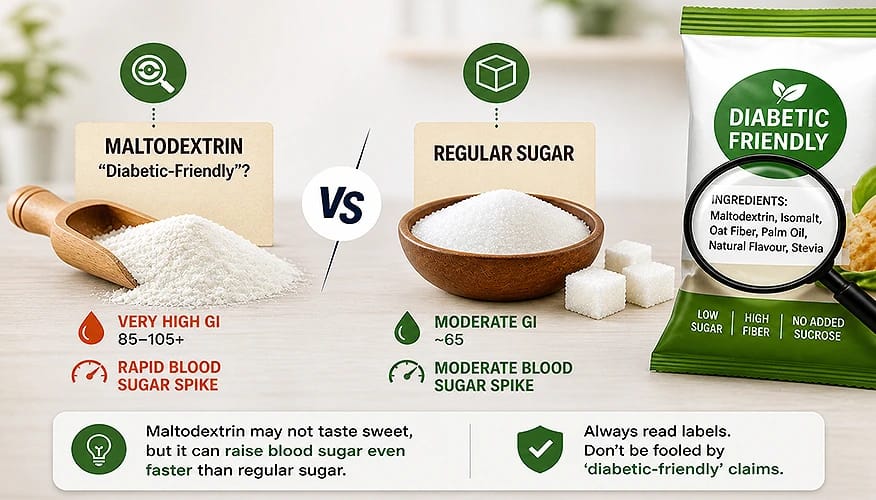
Maltodextrin — often found in “sugar-free” or “diabetic” products — has a Glycemic Index of approximately 110. In comparison, regular table sugar (sucrose) has a GI of about 65. This means maltodextrins effects can raise blood glucose significantly faster than sugar many people are trying to avoid.
In recent years, experts have raised concerns about the increasing use of refined carbohydrates — including isolated starches and maltodextrins — in processed foods and beverages. These carbohydrates are rapidly digested and can trigger sharp increases in blood sugar, insulin, and blood fat levels after eating. When this happens frequently, it may increase long-term metabolic risks.
This is especially important for individuals with diabetes or those at risk, as their bodies are more sensitive to sudden spikes in glucose and insulin.
That’s why it’s essential to read beyond the front label and understand what’s truly inside your food.
How to use GI smartly when choosing ‘diabetic’ foods
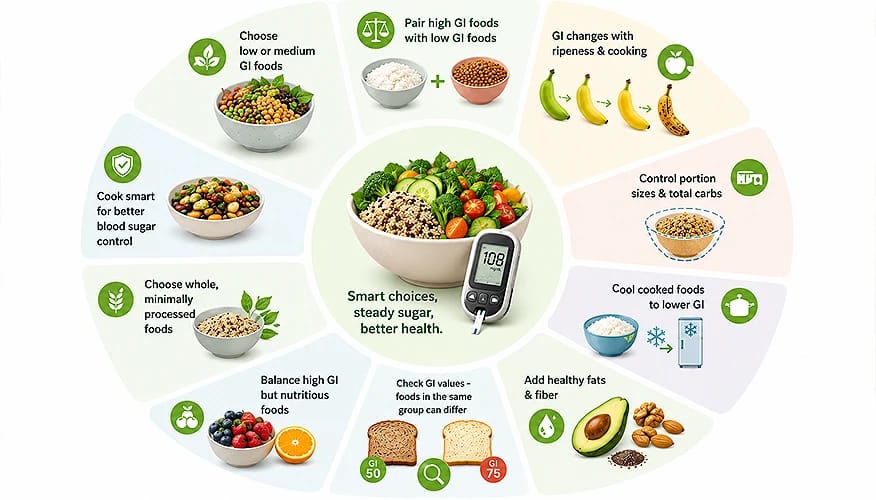
Plan meals that keep your blood sugar steady and support overall health.
- Pick mostly low- or medium-GI foods.
- If you eat high-GI foods, pair them with low-GI options to keep blood sugar steady.
- GI can change with ripeness, cooking, and food combinations.
- Watch portion sizes and total carbs(low carb),, even for low-GI foods.
- Whole, less processed foods usually have a lower GI than processed ones.
- Cooking methods also matter because creating resistant starch can lower the glycemic impact; cooling cooked rice and reheating before eating has produced lower postprandial glucose than the same foods served hot.
- Fat and fiber can lower GI.
- Foods in the same group can have different GI values — check before choosing.
- Balance high-GI but nutritious foods with low-GI options.
A simple habit like using a device for monitoring blood sugar levels after food can guide smarter choices and support a diabetic nutritious diet.
GLUCOMEAL VANILLA: A smart, low GI option for diabetics
GLUCOMEAL VANILLA is a whey-dominant nutrition powder for adults with diabetes or prediabetes to use as a snack or occasional mini-meal.
It contains over 80% high-quality whey protein and essential amino acids that help support blood glucose management when combined with a balanced diet and regular exercise.
Some of the key benefits include:
- Low Glycemic Index to support steadier blood sugar levels
- Helps promote better glycemic control
- Supports healthy weight management
- Heart-friendly formula for overall cardiovascular wellness
Choosing balanced meals and healthy snacks for a diabetic can make blood sugar control easier, steadier, and more sustainable in the long run.
Conclusion
Managing diabetes goes beyond trusting “diabetic” labels. Understanding the Glycemic Index (GI) helps you make smarter food choices and avoid unexpected blood sugar spikes.
Some ingredients, like maltodextrin, may raise glucose levels quickly—even when included in products marketed for diabetes. That’s why reading labels and checking carbohydrate sources is essential.
Start small by making one simple swap a day and consider incorporating GlucoMeal Vanilla for a convenient and reliable path to better sugar control.
With smart planning and simple swaps, you can enjoy satisfying meals that nourish your body, support steady blood sugar, and fit well into a diabetic nutritious diet.
Rate our article
We'd love to know!
- 0
- 0
- 0
- 0
Related articles
See AllFrequently asked questions
No. A product can be labelled ‘sugar-free’ yet still contain high–glycaemic index carbohydrates such as maltodextrin. These ingredients can raise blood glucose quickly despite the absence of added sugar.
In terms of glycemic response, maltodextrin can raise blood sugar as fast as—or sometimes faster than—table sugar. Its high GI means it is rapidly absorbed and can lead to sharp glucose spikes.
No. Blood sugar response is influenced by multiple factors, including glycaemic load (GL), portion size, overall diet quality, and physical activity. GI is useful, but it should not be viewed in isolation.
Yes. Including protein in meals can slow digestion and help reduce post-meal blood sugar spikes. Balanced meals with protein, fibre, and healthy fats support better glucose control.
Both are important. Use GI to choose slower-digesting carbohydrates, and GL to understand the impact of portion size. Together, they provide a more complete picture of how foods affect blood sugar.
How was the experience with article?
We'd love to know!