The 3 PM Hunger Trap: Why Standard Diabetic Snacks Fail (And What Works)
- 07 Oct 2026

Key highlights or summary
- Mid-afternoon hunger in diabetes is often caused by blood sugar spikes and rapid glucose drops.
- High-GI carbohydrate foods like biscuits or sweets can worsen glucose fluctuations.
- Combining plant protein and high-fibre foods slows digestion and improves satiety.
- Smart snack choices are an essential part of a balanced diet for DM.
- Low-GI nutrition helps provide longer-lasting energy and reduces overeating later.
Many people living with diabetes often wonder, “Why am I always hungry with diabetes?”
It’s common to feel hungry or tired just a few hours after eating. This happens when blood sugar rises after a meal and then drops quickly (reactive hypoglycaemia). You may feel low on energy, mentally foggy, or even irritable despite having a full lunch, something many call the “3 PM energy crash.”
This isn’t about willpower. Sudden changes in blood sugar can trigger hunger signals and cravings, especially for sugary or refined foods, as your body looks for quick energy.
In this blog, we’ll explore why this energy crash happens, how everyday snack choices can make it worse, and why some “healthy” diabetic snacks don’t keep you full.
We’ll also share smarter snack ideas and how options like Glucomeal® can help you stay energised through the afternoon.
Why does 3 PM hunger happen?
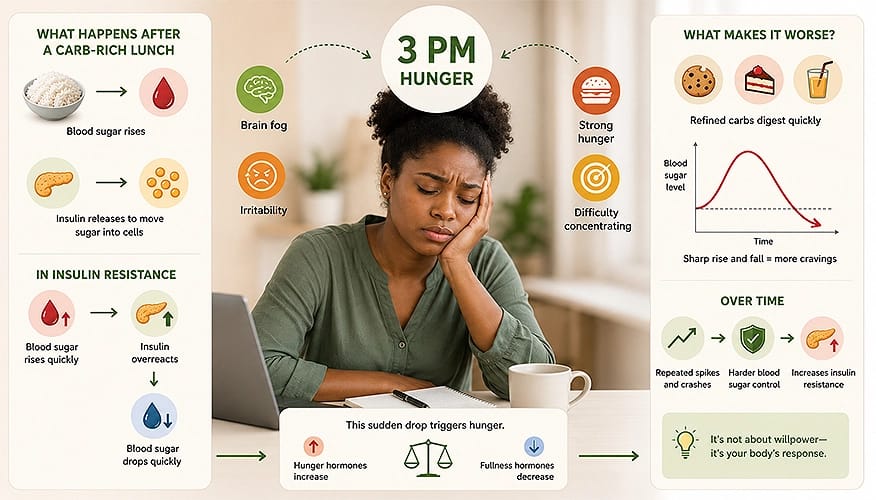
Many people notice a dip in energy by mid-afternoon. You might feel:
- Brain fog
- Irritability
- Strong hunger
- Difficulty concentrating
This often starts with what happens after lunch. When you eat a carbohydrate-rich meal, your blood sugar rises. Your body releases insulin to move this sugar into cells for energy.
But in people with insulin resistance, this process is not well balanced. Blood sugar may rise quickly, and insulin may overreact—causing levels to drop soon after. This sudden fall, known as reactive hypoglycaemia, triggers hunger signals. Hormones that increase appetite rise, while those that make you feel full reduce.
At the same time, natural afternoon changes in your body can lower alertness and increase fatigue—making the hunger feel even stronger.
What makes this worse? Many common evening snacks like biscuits, pastries, and sweet drinks are made of refined carbohydrates. These digest quickly, causing another sharp rise and fall in blood sugar—leading to more cravings soon after eating.
Over time, this repeated cycle of spikes and crashes can make blood sugar control more difficult and increase insulin resistance.
That’s why this isn’t just about willpower—it’s your body’s response, often leaving you wondering, “Why am I always hungry with diabetes?”
Why do standard diabetic snacks fail?
Not all sweets for diabetics are as safe as they seem
Many packaged or commonly recommended diabetic snacks or are marketed as "sugar-free" yet remain high in refined starches. common issues include:
- High glycemic carbohydrates
- Low protein content
- Minimal fiber
- Hidden sugars
- Small portion satiety
Some of these "diabetes-friendly" snacks may contain sugar alcohols or refined flours that still trigger blood sugar imbalances. Studies have shown that a rapid rise in blood glucose levels after snacking can contribute to the development of insulin resistance.
Therefore, these snacks or sweets for diabetics may satisfy the craving for taste in the moment, but they do not satisfy the body's hunger for balance.
The science of low-GI satiety
A more effective strategy is low-GI satiety. Low glycaemic index foods digest slowly and release glucose gradually, helping maintain steady energy levels.
Balanced diabetic snacks should contain:
- Plant protein or other high-quality protein
- High fiber foods
- Healthy fats
- Moderate carbohydrates
Protein stimulates satiety hormones that reduce hunger. Fiber slows digestion and the release of glucose into the bloodstream. Studies show that protein-rich snacks can improve insulin sensitivity and reduce afternoon glucose fluctuations.
High-fibee foods slow digestion and help maintain stable blood sugar levels by reducing the rate of glucose absorption in the intestine.
Low-GI snacks combined with protein and fiber digest more slowly, helping you feel full for longer. They can be a smart choice for managing diabetes, supporting better blood sugar control, and even aiding in weight management.
Smart snack choices for diabetes
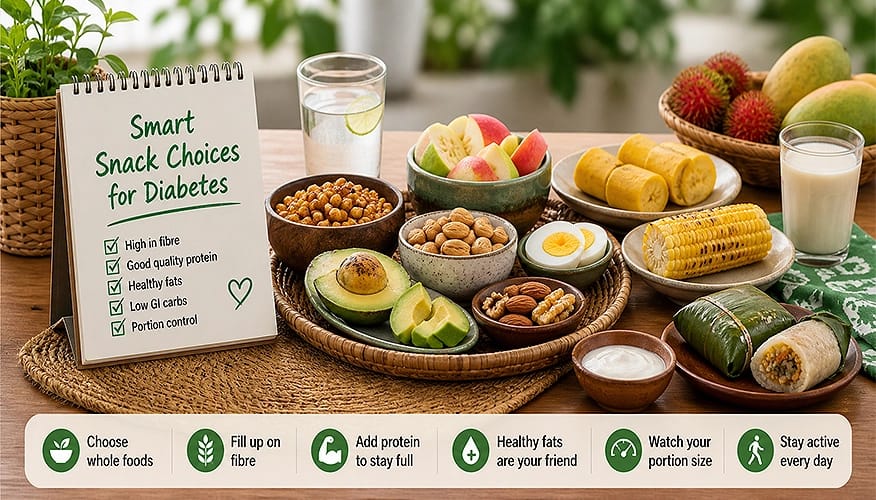
Do your sweets for diabetics satisfy more than just your cravings?
Effective healthy diabetic snacks should:
- Contain at least 8-15g protein
- Include fiber-rich carbohydrates
- Avoid refined starches
- Be portion-controlled.
Examples suitable in Southeast Asia include:
- Boiled eggs with cucumber
- Roasted chana or peanuts
- Tofu cubes with sesame
- Greek yogurt with seeds
- Lentil sprouts
Answer your question—“why am I always hungry with diabetes”—by swapping refined biscuits or sweet tea snacks for these smarter options to reduce afternoon crashes.
A word about bedtime snacks
Many people wonder about the best bedtime snacks for blood sugar control. The right choice before bed can make a big difference overnight.
A small, protein-rich snack may help:
- Prevent low blood sugar during the night
- Keep morning blood sugar levels more stable
- Support your body’s metabolism while you sleep
Simple options include unsweetened yoghurt, a handful of nuts, or a boiled egg. Choosing light, balanced snacks like these can help you wake up feeling more steady and energised.
The Glucomeal® edge: A smart snack solution
For many people, preparing balanced snacks every day may not always be convenient—especially during busy workdays. Medical nutrition solutions such as Glucomeal® Vanilla are designed specifically for diabetes management.
Glucomeal® contains low-glycaemic carbohydrates with balanced protein and essential vitamins and minerals. It contains whey protein concentrate, packed with essential amino acids that help support healthy blood sugar levels. It also helps your body release insulin more effectively, keeping your sugar levels steady after meals.
As part of a balanced diabetic diet, Glucomeal® can serve as a best bedtime snack for blood sugar control, helping support stable glucose levels and prevent the mid-afternoon hunger crash.
Why stable blood sugars matter
Frequent fluctuations in glucose levels lead to heightened oxidative stress and overall inflammation in the body. Over time, variations in blood sugar levels are linked to:
- Deteriorating insulin sensitivity
- Elevated risk of cardiovascular issues
- More significant complications related to diabetes
Keeping blood sugar levels steady is key to better health in diabetes and can help reduce long-term complications. Choosing balanced snacks with plant protein and fibre supports steady energy, keeps you fuller for longer, and makes managing diabetes easier in everyday life.
Conclusion
Many so-called diabetic snacks focus only on reducing sugar but miss the bigger picture. Factors like glycaemic load, protein content, and hunger-regulating hormones also play an important role in keeping you full and energised.
Swapping refined carbohydrate snacks for more balanced options—rich in plant protein and high in fibre—can help slow digestion and provide steady energy through the afternoon. This helps avoid sudden spikes and crashes in blood sugar.
Understanding why these hunger dips happen makes it easier to choose foods that truly support your body. Smart nutrition choices, including convenient options like Glucomeal, can help maintain stable glucose levels and prevent that mid-afternoon energy crash.
Rate our article
We'd love to know!
- 0
- 0
- 0
- 0
Related articles
See AllFrequently asked questions
Afternoon hunger is often linked to a dip in blood glucose levels following earlier meals. This drop can trigger hunger hormones and fatigue signals, especially if meals are high in refined carbohydrates or low in protein and fibre. The result is a sudden craving for quick energy, typically around mid-afternoon.
Not always. While sugar-free snacks do not contain added sugar, many still include refined starches such as maltodextrin, which can have a high glycaemic index. These ingredients may cause rapid blood glucose spikes, making them less effective for stable blood sugar control.
Snacks that combine protein, fibre, and healthy fats are most effective for blood sugar control. Options such as nuts, yogurt, boiled eggs, or whole foods with a low glycaemic index help slow digestion, reduce glucose spikes, and provide more sustained energy.
Yes. Some “diabetic-friendly” sweets may still contain high-GI ingredients or refined carbohydrates that can raise blood sugar levels. Labelling can be misleading, so checking ingredient quality and overall composition is important.
Low glycemic index snacks are digested more slowly, leading to a gradual release of glucose into the bloodstream. This helps reduce sudden hunger spikes, improves satiety, and may support better portion control over time.
Balanced snacks can be helpful, especially for preventing energy dips between meals. When chosen wisely, they support stable blood sugar levels and reduce the likelihood of overeating during main meals.
Yes. Protein supports the release of satiety hormones and slows digestion, helping to maintain stable blood glucose levels. Including protein in snacks can reduce cravings and improve energy levels through the afternoon.
Yes. Repeated spikes and drops in blood glucose can increase oxidative stress and may contribute to long-term complications, including cardiovascular risks. Maintaining stable blood sugar levels is an important part of overall metabolic health.
How was the experience with article?
We'd love to know!