The ‘Muscle-Immunity’ Connection: Why Strength Is Your Best Defense Against Infection
- 07 Oct 2026

Key highlights or summary
- Modern lifestyles, poor diet, and stress can show signs of weak immunity.
- Vitamins D3, C, zinc, selenium, and protein are crucial for immunity.
- Supplements like REKOVER provide combined nutrients and immune system protein for overall health.
- Lifestyle habits—sleep, exercise, and balanced diet—amplify supplement benefits.
- Always tailor supplements to individual needs and consult a healthcare professional.
What if your strongest defence against infection isn’t just your immune system but your muscle?
Across populations, nutritional gaps remain a silent but significant concern. More than half of individuals are estimated to have low vitamin D levels, while inadequate zinc intake affects nearly one in six people globally particularly in regions such as South Asia. Among older adults, insufficient protein and energy intake is also common, quietly impacting strength, recovery, and overall resilience.
Nutrients such as vitamins, zinc, selenium, and protein are essential for supporting immune function. When these are lacking, the body’s ability to fight infections and recover efficiently can decline. According to the World Health Organization, maintaining adequate nutrition is a cornerstone of immune health across all age groups.
But nutrition is only part of the story.
Muscle health plays a critical and often overlooked role in immune resilience. Skeletal muscle is not just responsible for movement; it actively supports metabolism, regulates inflammation, and contributes to the body’s defence mechanisms. Loss of muscle mass, particularly with ageing, has been linked to reduced immunity and slower recovery from illness.
This connection between muscle and immunity highlights an important shift in how we think about protection: strength is not just about mobility—it is a key part of staying resilient against infection.
In this article, we explore how muscle strength and immune function are interconnected, and the practical nutrition and lifestyle strategies that can help build stronger, more resilient health over time.
Need for immune supplements in today’s world
Modern life places a constant, often invisible strain on the immune system. Irregular eating patterns, processed diets, chronic stress, pollution exposure, and limited sun exposure can all contribute to subtle but meaningful nutritional gaps over time.
Even when diets appear adequate, key nutrients that support immune function such as vitamin D, zinc, selenium, and high-quality protein are commonly under-consumed. According to the World Health Organization, micronutrient deficiencies continue to affect large populations globally, influencing the body’s ability to maintain strong immune responses.
At the same time, ageing, metabolic conditions, and low muscle mass can further weaken immune resilience. This creates a gap between what the body needs and what it actually receives on a daily basis.
Immune supplements can help bridge this gap; not as a replacement for a balanced diet, but as targeted nutritional support where deficiencies or increased needs exist. When used appropriately, they can support immune function, improve recovery, and help the body maintain resilience against everyday health challenges.
When muscles lack proper nutrition, signs of weak immunity, increasing infection risk and slowing recovery.
How your muscles support your immune system
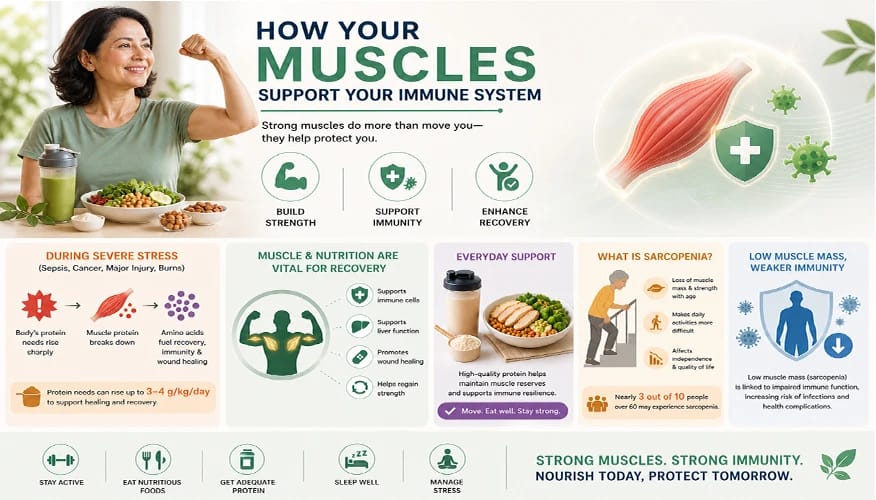
When we think about muscles, protein and strength are usually the first things that come to mind. But have you ever considered that muscles are also closely linked to your immune health?
During severe stress — such as sepsis, advanced cancer, or major injury — the body’s protein needs rise sharply. To cope, the body breaks down muscle protein to release amino acids that support recovery, immune function, and wound healing.
In serious cases like extensive burns, protein intake may need to reach about 3 g per kg of body weight per day to provide enough building blocks for healing. Because immune cells, the liver, and other tissues also require amino acids, total protein use can exceed 4 g/kg/day — around 4 times higher than normal intake. This shows how vital muscle reserves and nutrition are during recovery.
While muscle mass supports healing and regain strength after illness, muscle strength and function are equally important. In everyday life, using a high-quality protein powder for muscle building can help maintain muscle reserves and support overall immune resilience.
Sarcopenia is the gradual loss of muscle strength and muscle mass that happens as we grow older. It’s more than just “getting weaker with age.” Sarcopenia can make everyday activities like climbing stairs, carrying groceries, or getting up from a chair more difficult. Over time, it can reduce independence, affect quality of life, and even increase the risk of falls and health complications.
In fact, studies suggest that nearly 3 out of 10 people over the age of 60 may experience sarcopenia.
Low muscle mass (sarcopenia), particularly in older adults, is linked to impaired immune function, reducing the body’s ability to combat pathogens and increasing disease susceptibility.
Protein’s role in immune health
Protein intake is often overlooked in immune health, but it is critical. Immune cells (T, B, macrophages, NK cells) are constantly renewing; antibodies are protein; many immune mediators are proteins/cytokines.
- Builds immune tools: Proteins and their building blocks, amino acids, help make antibodies and other important immune system proteins.
- Supports immune cells: Helps white blood cells like T cells, B cells, and natural killer (NK) cells grow and work better.
- Fights inflammation and stress: Certain amino acids make antioxidants that protect cells and keep inflammation in check.
- Supports antibody production: Helps your body make antibodies and other important immune system proteins to fight germs.
- Supports muscle mass: Adequate protein preserves lean muscle mass, which serves as a metabolic and immunological reserve to help regain strength after illness. During infections, the body breaks down muscle protein to supply amino acids needed for immune defense and recovery.
When dietary intake is insufficient, immune system protein can help bridge the gap and support both muscle and immune health.
Essential vitamins and minerals for immunity (Vitamin C, D, Zinc, Selenium)
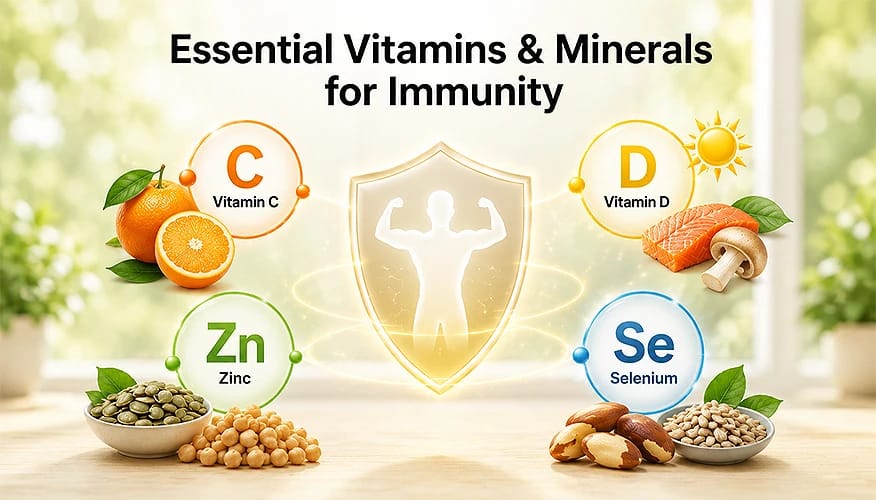
So, how to boost the immune system?
It starts with the right nutrients. Vitamins C and D, along with zinc and selenium, help strengthen your body’s defenses and support overall immune health. Let’s see how each one works.
Vitamin D
- Role: Supports bone and muscle health, calcium absorption, and immune function. Helps lower viral replication, reduce inflammation, and boost immune cells.
- Deficiency effects: Increases risk of infections, weakens tissue barriers, and impairs immune cell function.
Vitamin C
- Role: Antioxidant, boosts immunity, protects tissue barriers, may reduce viral replication, and helps maintain muscle strength through collagen synthesis.
- Deficiency effects: Weakens immunity, increases infection risk.
Zinc
- Role: Supports muscle regeneration and essential for immune cell function, antiviral and anti-inflammatory effects, maintains tissue barriers.
- Deficiency effects: Impaired immunity, higher risk of infections (respiratory, diarrhea) and pneumonia.
Selenium
- Role: Protects muscles from oxidative stress, supports immune cells, antioxidant functions, may reduce infection severity.
- Deficiency effects: Impaired immunity, increased infection risk.
Choosing the right supplement for your health needs
Supplements can support muscle strength and immunity — but they work best when chosen wisely and tailored to your needs.
- Look for protein, essential amino acids, and immune-supporting nutrients like vitamins D and C, zinc, and selenium for immunity and to help preserve muscle, and improve recovery.
- Consider your diet, activity level, and health status. If you have low muscle mass or frequent infections, you may benefit from targeted support.
- Choose evidence-based supplements with proper dosing and quality.
- Remember, supplements fill nutritional gaps — they don’t replace balanced meals, strength training, good sleep, and healthy lifestyle habits.
Nutritional supplements
Immune booster supplements help strengthen your body’s natural defenses. But is whey protein truly good for your health?
Let’s explore how Rekover supports immunity, muscle health, and overall wellness.
REKOVER is a fortified supplement combining Whey protein (rich in essential and branched-chain amino acids), vitamins, and minerals to support overall health, immunity, and muscle repair.
Let’s understand how whey helps regain strength after illness?
Benefits:
- Promotes muscle growth and recovery.
- Provides antioxidant and anti-inflammatory support to protect cells from infections and free radicals.
- Supports immune health and overall well-being.
- Helps in post-surgery recovery and in managing chronic conditions like diabetes, cancer, and metabolic illnesses.
Lifestyle tips to complement supplement use
Supplements are not a replacement for a healthy lifestyle — they work best when paired with good daily habits.
- Maintain a healthy weight to help your body use nutrients effectively.
- Stay physically active, even a few times a week, to boost overall health and improve nutrient absorption.
- Prioritize good-quality sleep so your body can repair and recover properly.
- Avoid smoking and limit alcohol, as both can reduce nutrient benefits.
- Eat balanced meals regularly. A varied diet helps your supplements deliver their full benefits and supports long-term wellness.
Conclusion
Strong muscles are more than a fitness goal—they are a key part of your immune defense. Maintaining muscle mass provides protein reserves and signaling molecules that support immune cells, reduce inflammation, and aid faster recovery to regain strength after illness.
Vitamins D3 and C, zinc, selenium, and adequate protein are essential for keeping both muscles and immunity in top shape. Supplements like REKOVER can help fill nutrient gaps, especially for those with limited diets, high physical demands, or health challenges.
But supplements work best alongside healthy lifestyle habits. Regular strength training, balanced nutrition, sufficient sleep, and stress management all enhance muscle and immune function. By focusing on both muscle strength and nutrient support, you build a resilient body that’s better equipped to fight infections and recover faster—making strength truly your best defense.
Rate our article
We'd love to know!
- 0
- 0
- 0
- 1
Related articles
See AllFrequently asked questions
No. Supplements support immune and muscle health but are most effective when combined with a balanced diet, regular physical activity, and adequate sleep. They should be used to complement—not replace—healthy lifestyle habits.
Key nutrients include vitamin D3, vitamin C, zinc, selenium, and high-quality protein. These support immune cell activity, reduce oxidative stress, and help maintain muscle strength and recovery.
Protein needs vary based on age, activity level, and health status, but adequate intake is essential. Both immune cells and antibodies rely on protein, while muscles require it to maintain strength and support recovery.
Older adults, individuals with low nutrient intake or sun exposure, those recovering from illness or surgery, and people with higher physical demands may benefit from targeted supplementation.
How was the experience with article?
We'd love to know!