From Bed To Strength: Rebuilding After Hospitalisation
- 07 Oct 2026

Key highlights or summary
- Muscle weakness can begin within just a few days of hospitalisation
- Older adults may lose strength faster and need extra care
- Increasing protein intake helps rebuild lost strength and energy
- Whey protein is easily absorbed and supports quicker muscle repair
- A mix of nutritious food and gentle daily movement speeds recovery
When a loved one returns home after a hospital stay, relatives often believe the worst part is over. The infection has resolved, the surgery is complete, and discharge papers are signed. However, recovery does not end at the hospital door.
Even a short hospital stay can result in significant muscle loss, weakness, fatigue, and reduced mobility. This condition, often referred to as hospital-associated deconditioning, can make simple daily tasks feel overwhelming. Without targeted nutrition and rehabilitation, the road back to independence becomes longer and more difficult.
Gaining strength after illness requires more than rest. It needs targeted nutrition, adequate protein, and gradual movement. In this blog, we explore why muscle loss happens during hospitalisation and how nutrition and movement can rebuild strength safely.
Body changes during hospital stay
During illness or surgery, the body enters a state of inflammation. Bed rest, reduced appetite, medications, and stress hormones accelerate muscle breakdown.
Inflammation increases muscle breakdown
Illness triggers cytokines (inflammatory chemicals) in the body. These chemicals:
- Increase muscle protein breakdown
- Reduce the body’s ability to build new muscle
- Shift energy toward fighting infection or healing wounds
So even if the patient eats normally, the body may still lose muscle. Research shows that elderly individuals can lose up to 1–1.5% of muscle mass per day during acute illness.
What is muscle wasting?
Muscle wasting (also called sarcopenia) refers to the loss of muscle mass, strength, and function. It can happen rapidly during illness, hospitalization, or prolonged inactivity.
- Can begin within 3–5 days of bed rest
- Leads to reduced strength and slower recovery
- Common in patients recovering from surgery or infection
How bed rest causes muscle loss
Even short periods of bed rest can have serious effects on the body.
- Muscle loss can be up to 1–1.5% per day
- Leg muscles weaken faster than upper body
- Reduced mobility affects balance and independence
Studies suggest that up to 30–50% of muscle mass loss risk increases during prolonged hospitalisation if protein intake is inadequate. The result is acute sarcopenia, a sudden and accelerated loss of muscle mass and strength. This is why early nutrition and continuous movement is critical.
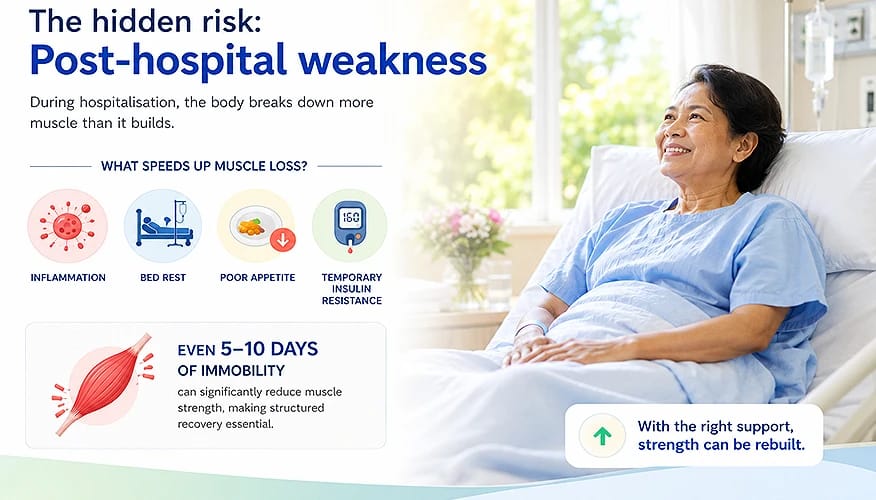
The hidden risk: Post-hospital weakness
During hospitalisation, the body enters a catabolic state where muscle protein breakdown exceeds muscle building. Inflammation, bed rest, reduced appetite, and temporary insulin resistance together accelerate muscle loss, particularly in older adults.
Even 5-10 days of immobility can significantly reduce muscle strength, making structured recovery essential. Many patients appear clinically stable at discharge but remain functionally weak.
Warning signs include:
- Difficulty standing from a chair
- Fatigue after short walks
- Reduced grip strength
- Loss of confidence in mobility
Without intervention, this weakness may persist for months and increase the risk of falls and rehospitalization.
Why nutrition is the missing link

Families often focus on physiotherapy during recovery but overlook the equally critical role of nutrition. Protein is essential for muscle repair, immune function, and wound healing.
The European Society for Clinical Nutrition and Metabolism recommends a higher protein intake of 1.2–1.5 g/kg/day for individuals recovering from illness, compared to 0.8 g/kg/day for healthy adults.
However, due to poor appetite, fatigue, and early satiety, many patients fail to meet even their basic protein needs.This leads to a “protein gap” during a crucial recovery window, resulting in continued muscle loss and delayed healing especially in older adults.
Unfortunately, appetite is often poor after hospitalization. Regular home meals may not provide sufficient protein to reverse muscle loss. Protein is needed for elderly recovery.
Why whey protein is effective
Whey protein is a high-quality protein source with strong clinical relevance in recovery.
- Rich in essential amino acids (EAAs)
- High in leucine (key trigger for muscle synthesis)
- Rapidly absorbed compared to plant proteins
This makes it particularly effective in reversing muscle loss after illness.
Micronutrients also matter
Muscle function depends on more than protein alone. Deficiencies in vitamin D, B vitamins, zinc, and antioxidants can impair muscle strength, delay wound healing, and prolong fatigue. These are the best vitamins for weak body. Vitamin D has been associated with improved muscle strength and reduced fall risk in older adults.
Rekover: Supporting your comeback to strength
When meeting protein needs through regular meals becomes difficult, structured nutritional support may be required.
Rekover is designed to help bridge this gap by providing:
- High-quality whey protein
- Essential vitamins and minerals
- Support for muscle recovery and immune function
Whey protein is one of the most effective and easily absorbed sources of high-quality protein, making it especially valuable during recovery from illness or hospitalization. Derived from milk, whey contains all essential amino acids and is particularly rich in leucine, a key amino acid that supports muscle repair and prevents muscle loss. This makes it particularly useful during the early recovery phase when appetite is low.
In situations where appetite is poor or meeting protein needs through regular meals becomes difficult, a structured supplement for physical weakness is needed. This is why formulations like Rekover, which include whey protein, can offer a more complete and effective nutritional support for faster recovery and strength restoration.
Who needs special attention
- Elderly individuals
- Patients after major surgery
- ICU survivors
- Individuals with chronic illness
- Those with poor appetite
- Individuals with diabetes
Early nutrition intervention significantly improves outcomes in these groups.
Conclusion
Hospital discharge marks the beginning of a new phase of healing. Muscle loss during illness can occur rapidly, particularly in older adults, but it is not permanent.
True recovery after illness isn’t just about rest, it requires the right approach to rebuilding strength. It requires adequate protein for elderly recovery, inclusion of chakula cha kuongeza nguvu (food for strength), sufficient intake of the best vitamins for weak body support, and consistent gradual movement. In some cases, supplements for physical weakness may help bridge nutritional gaps when appetite is reduced.
With early intervention and structured support, strength can be rebuilt step by step. The journey from bed to garden is not just about muscle, it is about restoring confidence, mobility, and independence.
Rate our article
We'd love to know!
- 0
- 0
- 0
- 0
Related articles
See AllFrequently asked questions
Recovery after hospitalization can take anywhere from a few weeks to several months. The timeline depends on factors such as age, illness severity, muscle loss, appetite, physical activity, and protein intake during recovery. Older adults and people with prolonged bed rest may take longer to rebuild strength and mobility.
Regular home food may not always provide enough protein and calories for recovery, especially after surgery, infection, or prolonged hospitalization. Many patients need a structured nutrition plan with adequate protein, energy, vitamins, and hydration to help rebuild muscle strength and support healing.
Acute sarcopenia is rapid muscle loss that happens during or after illness, hospitalization, inflammation, or extended inactivity. Even short periods of bed rest can reduce muscle strength, mobility, and physical function, particularly in older adults.
Several nutrients play an important role in recovery and rebuilding strength after illness. Vitamin D supports muscle and bone health, B vitamins help energy production, Vitamin C supports immunity and tissue repair, and iron helps reduce fatigue linked to low oxygen delivery. Adequate protein intake is also essential for muscle recovery.
Yes. Feeling weak or tired after an illness is common, even after discharge from the hospital. Reduced appetite, inactivity, inflammation, and muscle loss during illness can continue to affect strength and energy levels. A balanced recovery plan that includes nutrition, movement, sleep, and gradual rehabilitation can help improve recovery over time.
How was the experience with article?
We'd love to know!